Sunday, January 31, 2016

Understanding an Anti-racist Pedagogy

I really enjoyed the readings for last week and feel like there’s SO much more I want to expand on and 300 words might not cover it. Not only were there a ton of moments that I found myself saying ‘YES’ or ‘Exactly’ in agreement with what the authors or persons being interviewed were saying, but I also found moments where I just wanted to hear more, or wanted to visually see what their ideal anti-racist school system, or classroom system would look like.

I’ve come to realize along my journey towards becoming a teacher just how nervous I am to be a first year teacher. The multicultural and anti-racist approach is something I want to fully engulf right from the get-go, but I worry that my lack of experience, nervousness, and potential need or desire to satisfy my principal, or any other administration’s expectation will limit me. I spend a lot of time worrying about whether people like me, and that’s my own internal struggle that I’m trying to take on this semester(that I need to take on before becoming a teacher), but what has me even more worried is will students like me? Will they feel comfortable opening up to me? How can I create a classroom that is more than just a surface level of encouraging inclusion? A classroom that truly has no political, racial, or economic preference-that teaches to the academic standards but doesn’t hold students to any other standard of culture.

‘First there is a surface stage in which people change a few expressions of culture in school. They make welcome signs in several languages and have a variety of foods and festivals. My problem is not that they start there. My concern is that they often stop there.” I drew some of these thoughts from this quote by Enid Lee.

I think Endid Lee is speaking to current teachers in her quote on changing classrooms to model an anti-racist pedagogy and feel like I have an advantage as a first year teacher to walk in knowing exactly what I want. Each and everyday I’m crafting ideas of what I want from myself, what I want from my students, and how I plan to get there. And I am so incredibly excited to get there. (Going off topic from multicultural edu, and thinking of my capstone course) In Understanding by Design the idea of backwards learning has been churning thew my mind in so many other elements of my life. In my steps towards learning the ukulele, in my plans towards becoming a teacher, in my advancement at my part time job, in so many aspects of my life I’m trying to start with understanding the big picture, figuring out what I know, what I need to know, and how to get there.

From Chapter 2 of Rethinking Multicultural Edu, this was one of the quotes by Lisa Delpit that I marked while first reading: “The more disconnected the content we teach-the more teachers try to teach skills out of context-the less likely students are to make sense of it. So we have to talk about the big picture....”

The big picture can sometimes be incredibly tough to find though! And as a future first year teacher, that plans to go in with a big picture, a plan, dreams, and realization that the dreams might not happen the way you expected, and that my future student’s happiness and learning might not happen the way I planned but that the environment and situation I create for that happiness and learning is what ultimately matters.

Alright, I feel like I should wrap up there but I also feel like there’s so much more I want to expand on from the readings but I’ll narrow it down to just a small section.

“Another thing we run into a lot is young African American students who have learned what some people refer to as a street sense, but their language might seem more mature in many ways.”

“The norms of regular classrooms are often so restrictive that any deviation suggests a pathology. So you get more African American children whose cultural norms may be a little different being directed into special education. Often teachers don't know how to best reach these kids, how to connect to what they know, how to connect to what their interests are, and what plays a part in it too.”

I could quote Delpit all day. After my experience observing in a FAIR first grade classroom, I feel like so much of what she touches on has given me a new lenses and way to understand what I observed.

I had such a hard time grappling with what I observed, and trying to figure out if it was ‘normal’. For context, the classroom I was in I would estimate had around 95 percent African American students and a first year white teacher. I did witness numerous attempts at bringing in African American culture but I don’t think it was incorporated into the learning nearly enough. I also think there was a disconnect from the teacher’s experience and expectations, and the student’s experiences and expectations.

What I write a lot about in my observation blogs, and what stands out the most is the ‘behavioral issues’ the students had, and the teachers attempt to overcome them. Reflecting now, I do think there were a few students that may have had actual behavioral issues or outside influences affecting their learning but for most of the students they just seem overall distracted. They had a hard time focusing. And I’m guessing that’s normal for 6 and 7 year olds but the learning still has to happen. And it can be done not only through an anti-racist lens, but in a way that incorporates the students interests.

Delpit has given me a couple ideas of how, she talks about focusing on students positive traits and noting how their negative traits can actually be positive traits in disguise. The example she gave was of a student that is constantly disruptive and that all the other students always follow in their lead, can be looked at as a student that’s a natural leader with a strong voice.

I don’t fully know how to construct an anti-racist classroom, but I do recognize that there were problems in the classroom I observed. The students in the 1st grade classroom at FAIR were coming to class with so much outside knowledge, but what was being taught in class didn’t connect to that. I think it’s easiest to engage students in what’s culturally relevant to them but also important to not dive too far into any one culture.

Monday, January 25, 2016

Bancroft Neighborhood Exploration

Last Friday I got to spend my morning exploring the Bancroft neighborhood of south Minneapolis. I was completely unfamiliar with the neighborhood before my exploration but after spending some time in the area, and talking to members of the community I definitely feel as if I have a stronger sense of the Bancroft community. My exploration began by observing housing and local businesses in the area. Many of the houses in the neighborhood stand out as appearing run down. I was unable to tell with a few houses if they were simply not being taken care of or abandoned. I also noticed a lot more houses as opposed to apartments or other forms of living.

 20160122_101933 (1).jpg

I spent a big chunk of my journey inside Seward Community Co-op which is one of the locations for fresh produce and healthy food. It’s only been open a few months, and it wasn’t very busy inside, but the store definitely seems to add a lot to the community. The produce section is very well stocked and there’s plenty of staff about at all times to help. I did notice that a lot of the products stocked in the co-op tend to be a lot more expensive than those you’d find in a Cub foods or even a Target. The co-op has primarily organic or natural products which I love, but I’m curious what percentage of people living in the community can afford it on a regular basis.


While I was in the Seward Co-op I talked to a man that worked in the Wellness department of the co-op that had a very positive things to say about the neighborhood and was able to recommend quite a few restaurants and coffee shops in the area. He also mentioned Little Box Sauna coming to the neighborhood, which is a traveling sauna that residents have free access too.


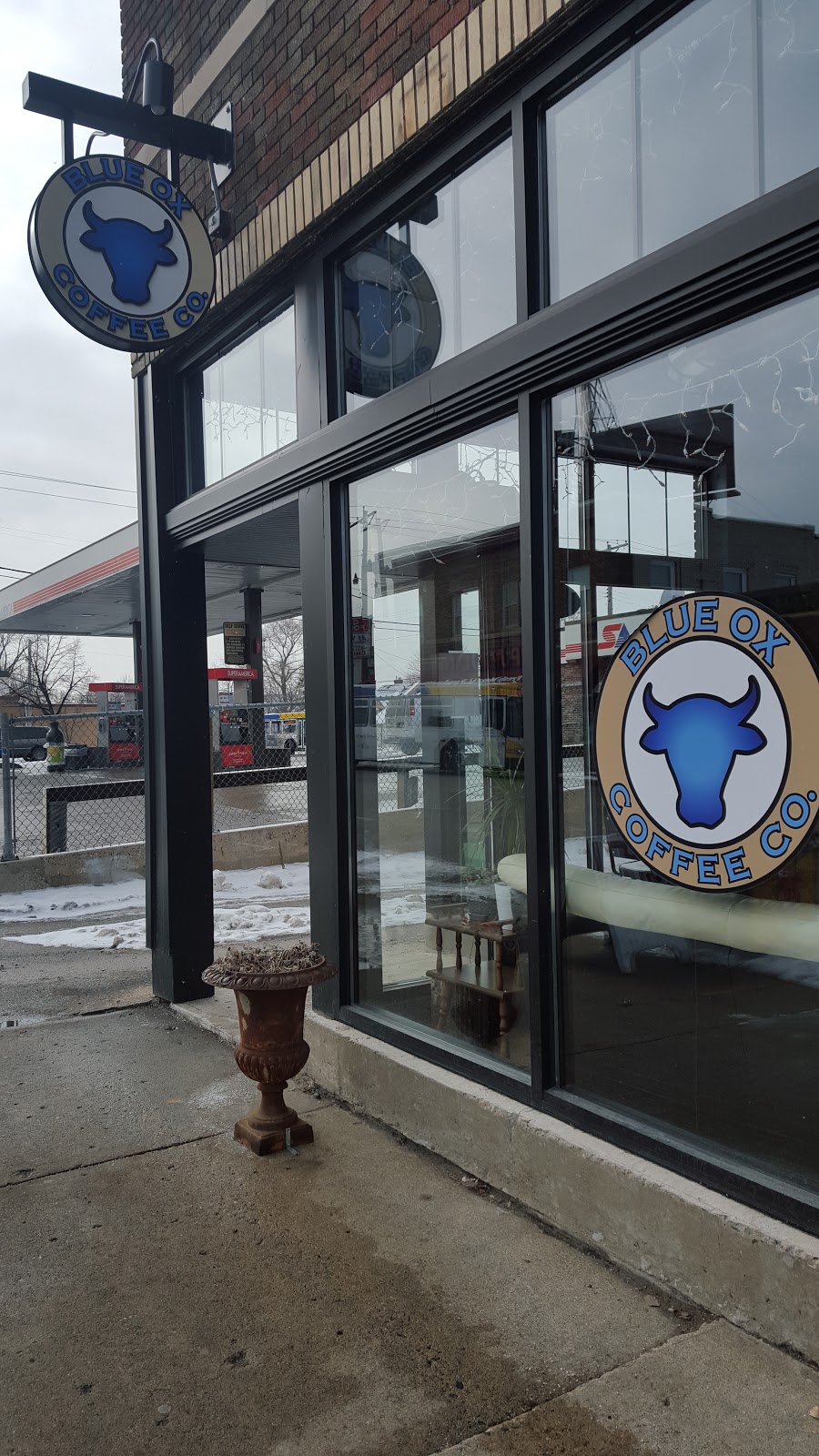
Another stop on my exploration was Blue Ox Coffee Co. I took a quick peek at the bulletin board there and sure enough there was the Little Box Sauna posted! I immediately wondered what drew the traveling sauna to this area, especially since it appears to be a very family centered neighborhood.

Overall I enjoyed the neighborhood a ton and can't wait to learn more with each visit.

Checkout more info about the Bancroft community here: https://docs.google.com/document/d/1VN2tJnNNbocKixZkiMi9E8kfJo1htApHTPCbwsWfKjw/edit
20160122_114604.jpg

Wednesday, January 20, 2016

Radical Learner Proposal

I arrived at the decision to learn to play ukulele through a number of steps and considerations.

This project is titled the “radical learner project” meaning I need to demonstrate an impact in the fundamental nature that is learning. Both as a learner and a designer of that learning. With that said, I don’t know anything about playing musical instruments, none the less the ukulele. I am a lover of listening to music but not by any means a musically gifted person. I anticipate that this task of learning something so entirely new to me is going to be difficult. I have zero knowledge behind playing musical instruments, and as a learner to will need to push myself to stay motivated. I am taking this Multicultural Approaches to Education course with the intent to become an exceptional elementary school teacher. I want to learn how to learn something with little interest and lack of previous knowledge because I imagine my future students might be starting at this point before a lesson. The big objective for me is to be able to understand my future students needs as learners. Learning the ukulele might not benefit me practically in life, will take up some of my time, and require me to focus both mentally and physically but these are expectations that I need to be able to empathize with if I’m to expect them of students one day.

For the sake of this project only spanning a couple months, I hope to have learned a short song or half of a longer song on the ukulele as a measure of my goal as a learner.

Three ways in which I plan to this:

Observation through the use of tutorials:
Learning the cords of the ukulele is going to require visually seeing the different cords being demonstrated on the ukulele. There’s a few different ways in which I could have this info visually taught, but I think the best method for me is going to be through online tutorials. My hope is that seeing the instrument up close with the ability to rewind and pause the video as needed are going to make this step of the learning process a lot easier. I also will be seeing an actual person demonstrate the cord, and hear what it sounds like so I can compare my own finger placement and be able to mimic the sound the tutorial instructors ukulele makes.

Application through the use of tutorials:
In this step of my learning I will be following along more intently with the online tutorial instructors and watching their steps to showing different chords put together to form a song.

Practice by means of repetition:
At this step my goal is ultimately memorizing chords and the order they go in to learn a certain piece of a song.

The steps in which I planned to achieve my learning goal were thought out in way that I thought would spark the learning the quickest. For example, my source of learning comes from online tutorials and not from books or an in person instructor which I think would require more of my time and energy. As a very observational learner I don’t think books give me enough of the reassurance I need like seeing a demonstration of the skills and in person lessons would hold too much pressure for me. The online tutorials are very convenient, and are a good way to visually see the skill I’m learning, and also hear how the music should sound.

I didn’t decide to dive into music theory and understand why the notes I’m learning sound good together. I’m diving into something without understanding what makes good music. I also don’t plan to learn to read music. I feel a little guilty  because I don’t want my future students to ever walk away from a lesson not understanding the why of what they’re learning. However, since my ultimate goal is to understand learning the basics of the skill and not to understand the concepts behind music, I don’t think those concepts are what matter.

Thursday, January 14, 2016

Retracing the Pedagogy of the Past

One of my favorite courses during my senior year of high school was Environmental Science. The teacher always had unique ways of keeping us engaged. For example, one of my favorite lessons of that course was identifying Minnesota native trees. We were not only required to memorize and describe characteristics of different native trees but also had to identify those characteristics when looking at the tree. One of the memories that stands out to me the most was taking a mini field trip with my class around my high school’s neighborhood. We walked down a walking trail and along sidewalks of the neighborhood observing the characteristics of trees and identifying them. The teacher led the way, eager to get to a certain tree he knew about in the neighborhood and then we all followed as students with our notebooks ready to take notes and draw pictures. He’d then see if any student could identify it based on our in class notes, and then point out the different characteristics of the tree.

To this day I can still identify trees when I’m out and about and I truly don’t think I would have been able to do so if I were sitting in class looking at slideshows or pictures of trees instead of seeing them in person. Of course it didn’t hurt that the weather was nice! It made for a fun learning experience, I think that also contributed to my ability to memorize different native trees so effectively. Typically whenever I’m told by a teacher that I need to know something because I’m going to be tested on it, I forget it almost immediately after the test. However this wasn’t the case for me, and I like trees and all, but not as much as anyone else I know.

I definitely think that the teacher planned this lesson well. I remember that the course was only offered during the spring semester, and based on the fact that we had a lot of outdoor lessons I think this could be why. I also think that the teacher knew this was a harder lesson to grasp from simply taking notes and looking at slideshow images of trees. It would have been much easier for the teacher to keep us indoors, in our assigned seats, but instead he chose the harder task of managing a bunch of 17 year olds in an open public space. We were later tested on what we had learned that day, and despite some serious senior slacking I remember doing well on that portion of the test.

I definitely think the teacher chose this hands on approach knowing it would work better for students. I think it was well thought out and well executed and I think that the fact that it stuck with me all these years is proof of that.

Tuesday, December 15, 2015

Observation #5

At this point I have completed 40 observation hours at the FAIR Elementary school in Downtown Minneapolis.  I've assisted students in their assignments, assisted the teacher in keeping students focused and on track with assignments and observed the students participate in recess, music class, and art class.


The school campus is right downtown It's very easy to identify from a distance and hard to miss. There are signs not only to identify the school, but also signs that explain it's purpose of bringing students from all communities together. They even list every town and suburb that they bring students from.  For the purpose of exploring the campus I decided to take an escalator that I'd kind of assumed was off limits. I didn't know where it went, and I assumed it was an area of the school I didn't have access to. It turns out it was just a completely unlabeled sky way access escalator.  Aside from that anomaly, the school was fairly easy to navigate. It can be difficult to find the main entrance, but once you are inside  I don't believe any parent should have trouble navigating their way to the administration office, as the door to that office is the first thing you see, and they can direct you wherever you need to go. There's also a parking ramp attached to the building so parents don't have to worry about finding a parking spot downtown.

There was only one instance when I saw a parent in the classroom, and it was to pick up their child who was misbehaving earlier in the day. The teacer took the time to speak with the parent about the behavioral issues that lead up to that point, so it appears that family members are welcome and kept informed.  The instructors main form of communication is e-mail or print outs that she sends home every single week . I like the idea of this form of communication, especially sending home a weekly letter to families that contain information that the parent might ask the child after school, such as "Do you have any homework?" With a consistent letter going home on the same day every week parents are able to hold their kid accountable for any assignments that might be due, or activities that need to be completed. It severely reduces the risk of a child lying about any homework they might have.
Family engagement is extremely important, and it's been shown that a household that engages and participates in the child's learning process will help develop a stronger student. I think if there's that expected weekly letter, student's can't hide or throw away the letter without the parents knowing. Also setting a specific day of the week to send home info keeps parents from guessing what's coming.

It was overall a difficult classroom to observe the teacher try to get through lessons and teach when there's frequent distractions ,but the teacher does a very good job at keeping routine. The students know where they are supposed to go and what's expected of them, even if they choose to ignore it a lot of the time.

Another strength was the dedication to determining where each student was at even when so many were struggling. Each week I noticed the teacher taking time with each student. Either in small groups or individually. She really would focus on helping them grasp the common core standards. The teacher would also have small lunch groups with students and get to know them and talk to them during that time. It was clearly very important to the teacher to give them individual attention.

My last day observing was really great. I was a bit surprised how drastically different the students were behaving. They were extremely polite to me and seemed sad that I wouldn't be back. Despite the chaotic nature of the classroom, despite the behavior issues that I witness on a nearly daily basis, the consistency and unwavering nature of the instructions had instilled some sense of important community.  It made me realize that despite things not going according to plan, despite dealing with difficult students and tough days, you need to consistently be there for your students. Whether or not you realize it, they are counting on you. If I were to go back and ask a question it would be "What do you think the parents could be doing to help the kids behavior in class? Is there anything we could do to engage those parents?" The kids at this school respond immediately to one threat: Telling the parents. They don't want their parents upset at them. I can't say for sure if it's always out of respect of their parent vs. fear, but it's clear that there is a strong opportunity for motivation there, and if they could tap into engaging the parents more in the classroom I think it would go a long way towards improving behavior.

Monday, December 14, 2015

First Semester Reflection (extra credit blog)

As I finish my first semester in pursuit of my future as an educator I'm left with a lot to reflect on. It's been challenging and has completely redefined what it means to me to be a good instructor. There are several issues, such as the difference between an achievement gap and an educational debt, that I'd never even considered. There truly are a lot of ways to see the world,  and education is no different.

The biggest thing I take away from this first part of my journey is how much more there is to education than just teaching content. The content is not nearly as important as the skills that are developed, and impact that the classroom experience has on the student.

My first set of courses have helped me focus my efforts by giving me the tools to figure out and define my own personal educational philosophy, along with lead me to opportunities to meet like minded students and professionals.

There are so many challenges that the education world faces, from bureaucracies to outdated models, to public perception and more. Being successful as a teacher isn't just about being a facilitator for students but by being an active member in the community, and tuning into the changes that need to occur. Without people innovating and pushing forward and rethinking systems that have been in place for more than 120 years, I don't think there would be a place for me in education today. I'm very grateful to be entering this field when I am, on the cusp of change and new things, things that I know I would have loved to experience as a student, and things that I truly believe will cultivate and guide students to be prepared for the future.

So now it's time to go on to part two, the second semester of my education at MCTC. As I do so I do so with a whole new set of tools and ideas, a whole new sense of focus and purpose, and a whole new list of goals and ambitions. There's no way for me to have imagined when I started this journey where I would be right now, and that makes me so excited to see where I'll be in another 4 months.  

Observation #4

So far I’ve completed a total of 27 hours observing at FAIR elementary school. My primary role has included helping students work on assignments, helping students stay focused, helping students during reading time, giving students make up spelling tests, observing students during music and art time, and a few other tasks.


FAIR Elementary is a school that has a 49% black and a 38% white student body. This is drastically different than my personal first grade experience where the vast majority of students were white.


Students are very aware of their skin color, and I think in particular in regards to their teachers and adults. At one point I had a student tell me I was white. It was almost as if she wanted to see how I would respond being confronted with that information. I’ve never heard the teacher address the racial differences. She’s a white teacher with 90% black students, and it doesn’t appear that she is connecting with their cultures outside of what she’s familiar with. There are times that it feels like she is trying to conform the students, but on a few occasions I have noticed her trying to connect in ways that they are more used to. For example, one of the sing along counting videos that the students enjoy is a kid friendly rap song that the students enjoy singing along to. It’s very clear that the students enjoy rap, because I’ve heard them singing rap songs like “Hot Cheetos and Takis” in class on several occasions. They’ve also danced in a hip hop style during times that encourage dancing. I find this interesting because the rap song the teacher plays is very basic and flashes through different images, but one is a spray painted image in the video of a white male with gold chains and baggy clothes.


Every friday there is a 3rd grade black student that comes to help students by doing a math lesson. The lessons are pretty basic, such as figuring out how many days there are until Christmas. The teacher told me that sometimes she feels like the students respect this third grade student more than they respect her. I noticed this too. He’ll wait for them to be quiet, and they’ll quiet down much quicker when he’s leading the discussion. I think skin color and being closer to their age makes him feel more relatable to the students, and as a result they look up to him and follow his instructions more consistently.

I remember one instance of a first grade romance I experienced where I noticed two students sitting next to each other often and even holding hands. They were teased often for ‘liking each other’ but it was all very innocent. As far as sexuality and gender goes, the students are all very young so this was the only thing I ever noticed relating to the issue. As with race and culture, the teacher either didn’t seem to notice or simply didn’t acknowledge it whatsoever.

I think there are subtle messages that the students are taking home from some of this unfortunately. They seem to act as though they can get away with more when there are white females in charge. I haven’t seen any white male teachers by comparison, so it’s difficult for me to comment on whether it’s race or gender specifically, but the students did obey the black woman much more than their white music instructor, as I talked about in my previous blog.